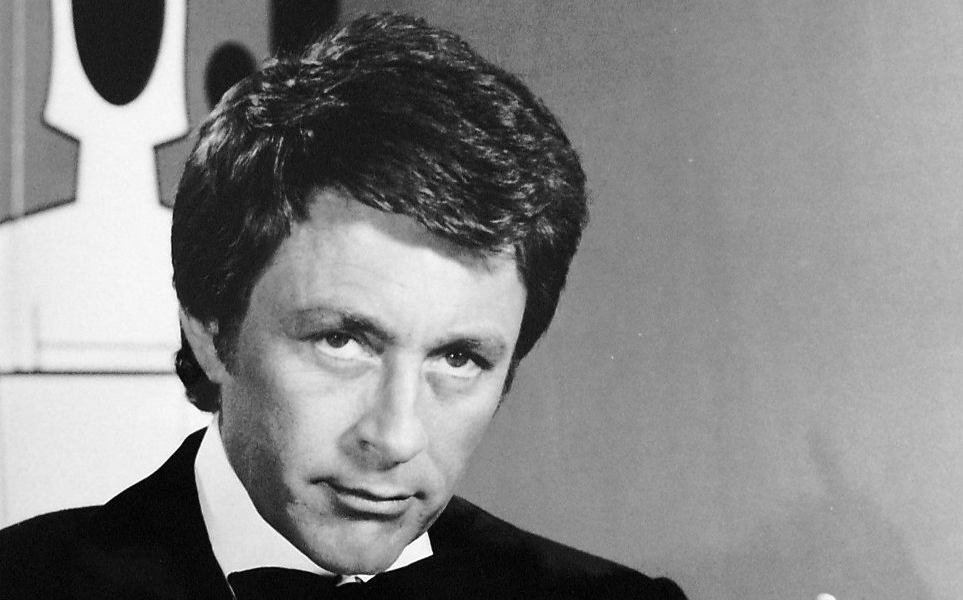
To the world, he was the man who turned green when he got angry. He was Dr. David Banner, a figure of immense power and immense sorrow. But to those who knew him, and to the millions who felt they knew him through the screen, he was simply Bill. A man of quiet charm, a “bright light” in an industry often defined by its artifice.
Born in 1934, this talented actor and TV director carved out a career that spanned over 30 years, surviving the shifting tides of entertainment trends. He is best known for playing that lonely scientist in the late ’70s and early ’80s—and trust us, you definitely wouldn’t like him when he’s angry! Sadly, the man behind the monster passed away too soon in 1993, leaving behind a legacy of kindness, resilience, and a body of work that defined a generation of television.
For over 30 years, this American television icon benefited from his talent, both on-screen and behind the camera. His easygoing charm didn’t go unnoticed. Colleague Ray Walston, who shared the screen with him during his breakout years, highlighted this as a key reason for his enduring popularity, saying:
”I believe that was the reason people liked him — instantly and completely.”
Who are we talking about? Of course, it’s Bill Bixby. But to understand the end of his story, we must first understand the beginning, and the incredible journey that took a boy from San Francisco to the heights of Hollywood stardom, only to be tested by tragedies that would break a lesser man.
A San Francisco Son Dreaming of the Spotlight
Wilfred Bailey Everett Bixby III—a name that sounds more like a bank president than a TV star—was born on January 22, 1934, in San Francisco, California. He was a fourth-generation Californian, born into a world of relative stability, yet he possessed a restless spirit that the foggy bay could not contain. Growing up as an only child, Bixby didn’t have siblings to play with; he had an imagination. He discovered his love for performing early on, not on a grand stage, but in the classrooms of Lowell High School, where he joined the speech and debate team. It was there, learning the cadence of language and the power of delivery, that the seed was planted.
He followed the expected path for a time, attending City College of San Francisco and then the prestigious UC Berkeley. He was just a few credits shy of a degree, on track for a conventional life, when the pull of the arts became too strong to ignore. He left school, a decision that likely baffled his parents, to pursue acting.
The road to Hollywood is paved with the shattered dreams of dropouts, but Bixby had something different. He had a quintessential “American” look—handsome but approachable, sharp but soft-spoken. To support himself, he worked as a lifeguard and a bellhop, hustling in the way every actor must. He did modeling and commercial work, smiling for print ads that sold the optimistic dream of post-war America. These early gigs were unglamorous, but they taught him how to work a camera, how to angle his face, and how to project a personality in a single frame.
The Martian that Launched a Career
Bixby’s big break came in 1963, a year when the country was on the precipice of massive cultural change. Television was moving from the stiff, black-and-white conservatism of the 50s into something slightly more fantastical. He landed the role of Tim O’Hara in the CBS sitcom My Favorite Martian.
The premise was absurd, in the delightful way 60s TV often was. Bixby played a young newspaper reporter who discovers a Martian (played by the legendary Ray Walston) whose spaceship has crashed. Bixby’s character passes the alien off as his “Uncle Martin.”
It was a masterclass in the straight-man routine. While Walston chewed the scenery with his antenna and telekinetic powers, Bixby grounded the show. He was the audience surrogate, the baffled human trying to maintain order in a world gone mad. The chemistry between the veteran stage actor Walston and the young upstart Bixby was electric. They were an odd couple for the space age.
The show ran for three seasons and made Bixby a household name. He wasn’t just an actor anymore; he was a TV star. He had “made it.” But Bixby wasn’t content to be typecast as the sidekick to a special effect. He had range, and he was determined to show it.
The Courtship of America
As the 1960s bled into the 1970s, the tone of American entertainment shifted. The wackiness of Martians and genies gave way to a desire for more grounded, emotional storytelling. Bixby found his next vehicle in The Courtship of Eddie’s Father, which premiered in 1969.
Here, Bixby played Tom Corbett, a widowed magazine editor raising his young son, Eddie (played by Brandon Cruz). This was a different Bixby. He was vulnerable. He was a father trying to navigate the dating world while grieving his wife and raising a child. The show broke the mold of the bumbling TV dad. Tom Corbett was competent, loving, and modern.
The relationship between Bixby and Cruz was the heart of the show. On-screen, they were inseparable. Off-screen, Bixby became a mentor and a surrogate father figure to the young actor. The show earned Bixby critical acclaim and cemented his status as a leading man who could handle both comedy and drama with equal grace.
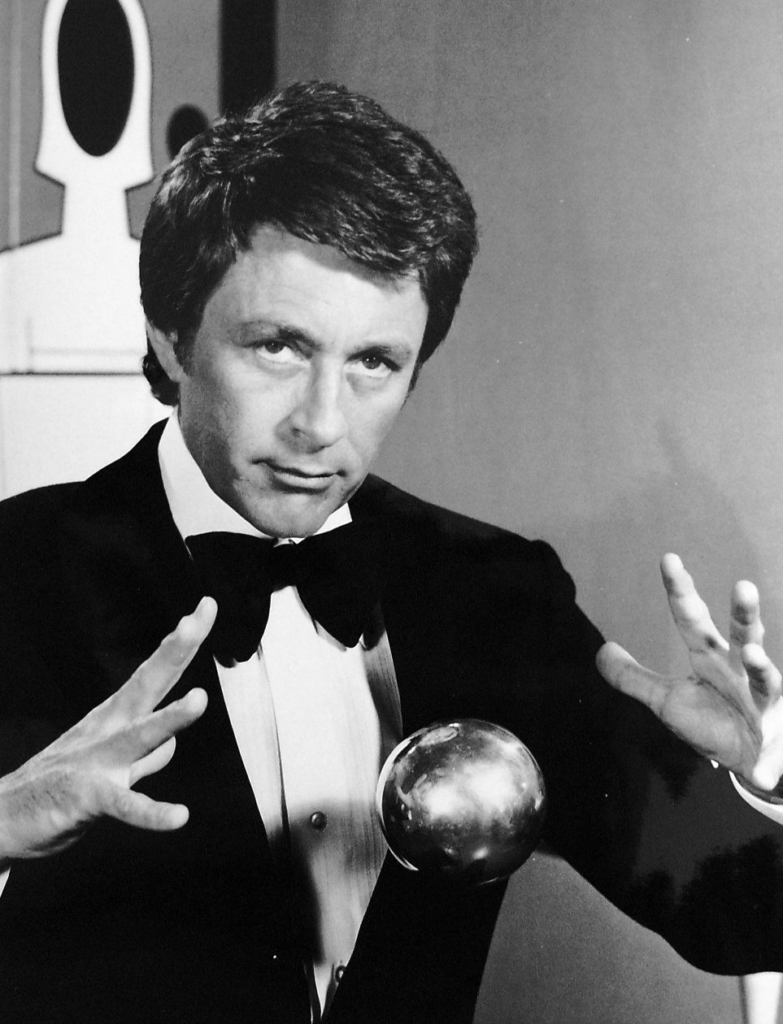
During this time, Bixby also took a risk on a show called The Magician (1973–1974). He played Anthony Blake, a rich playboy illusionist who used his skills to solve crimes. Bixby insisted on performing all the magic tricks himself, refusing to use camera trickery for the illusions. He studied with professional magicians, mastering sleight of hand. Although the show only lasted one season, it developed a fierce cult following. It was cool, stylish, and showcased Bixby’s intense dedication to his craft. He didn’t just play a magician; he became one.
The Lonely Road of David Banner
Then came the role that would define his career forever. In 1977, television producer Kenneth Johnson was looking to adapt a Marvel comic book about a giant green rage monster. It sounded ridiculous on paper. But Johnson didn’t want a campy superhero show like the Batman of the 60s. He wanted a tragedy. He wanted Les Misérables with a monster.
He needed an actor who could convey profound sadness, intelligence, and repressed anger. He needed Bill Bixby.
In The Incredible Hulk (1978–1982), Bixby played Dr. David Banner, a physician and scientist who accidentally overdoses on gamma radiation. The result is a curse: whenever he becomes angry or outraged, a startling metamorphosis occurs. He transforms into the Hulk (played by bodybuilder Lou Ferrigno).
Bixby never shared the screen with Ferrigno in character. They were two halves of the same whole. Bixby’s performance was a tour de force of melancholia. Every week, viewers watched David Banner walk into a new town, help people in need, inevitably turn into the beast, and then be forced to flee, hitchhiking down a lonely highway as that haunting piano theme played.
Bixby brought a Shakespearean weight to the role. He famously said, “I will not play a character who is a cartoon.” And he didn’t. He played a man on the run from himself. The line, “Mr. McGee, don’t make me angry. You wouldn’t like me when I’m angry,” became one of the most famous quotes in television history, delivered not with a snarl, but with a quiet, terrifying warning.
The Darkness Behind the Scenes
While Bixby was playing a man plagued by tragedy on screen, his real life began to spiral into a series of heartbreaks that rivaled any script.
In the 1970s, the star was one of Hollywood’s most eligible bachelors—he loved the ladies, and the ladies loved him. But he was famously guarded. In a rare interview about his personal life, he said:
“I’m a very private person. I rarely go to cocktail parties because I can’t stand the idle chatter of drunks. My weekends are spent at Malibu. I take a lady and go to the beach and enjoy the beauty of the beach and the lady.”
He eventually settled down, marrying actress Brenda Benet in 1971. For a while, life was beautiful. They had a son, Christopher, in 1974. Bixby was a doting father, finally living the role he had played so well in Eddie’s Father.
But the fairytale shattered. Bixby and Benet divorced in 1980. Then, in 1981, the unthinkable happened. Their six-year-old son, Christopher, went on a skiing vacation with his mother. He developed a sudden, severe throat infection—acute epiglottitis. It moved with terrifying speed. The swelling closed his airway, and just like that, the boy was gone.
The loss of a child is a grief that has no bottom. Bixby was devastated. But the tragedy compounded. Brenda Benet, consumed by grief over the loss of her son and the dissolution of her marriage, fell into a deep depression. Just a year later, in 1982, she died by suicide.
Bixby was left alone in the wreckage. The man who had charmed America, the man who had played the best father on TV, had lost his own family in the span of two years.
Work as Salvation
How does one survive such pain? For Bixby, the answer was work. He threw himself into his career with a ferocity that worried his friends. He moved into directing in the 1980s, finding solace in the technical precision of calling the shots. He directed episodes of Goodnight, Beantown and the satirical cop show Sledge Hammer!.
He wasn’t just a “celebrity director”; he was good at it. He had an actor’s language and a technical mind. He eventually became a regular director on the hit sitcom Blossom, starring Mayim Bialik. The cast adored him. He was patient, kind, and professional, never letting his internal scars show on the set.
He also returned to the role of David Banner for three made-for-TV movies: The Incredible Hulk Returns, The Trial of the Incredible Hulk, and The Death of the Incredible Hulk. He directed two of them himself. In The Death of the Incredible Hulk, Bixby finally allowed his character to find peace, letting the hero die after falling from a plane. It was a dark ending, perhaps reflecting Bixby’s own exhaustion with the struggle.
The Final Battle
In 1990, it seemed Bixby might find happiness again. He married Laura Michaels. But the shadows were lengthening. In 1991, he began to feel unwell. A visit to the doctor revealed a diagnosis that strikes fear into the heart of any man: prostate cancer.
It was aggressive. And as if the diagnosis wasn’t enough, his marriage to Michaels crumbled under the strain; they divorced later that same year.
Bixby, however, refused to hide. In an era when celebrity illnesses were often hushed up, Bixby went public. He appeared on entertainment news shows, looking frail but determined. He openly discussed his illness, hoping to raise awareness and encourage other men to get checked. He became an advocate, turning his personal battle into a public service.
Reflecting on his hopes during this terrifying time, he admitted with heartbreaking honesty:
“My prayer was that I would die in my sleep.”
He didn’t want to suffer. He didn’t want to waste away. But the cancer was relentless.
Love in the Time of Twilight
Despite the pain, despite the treatments that ravaged his body, Bixby kept working. He continued to direct Blossom. There are stories from the set of Bixby, so weak he could not stand, lying on a sofa to direct scenes. He would whisper instructions, his mind still sharp even as his body failed him. He refused to give up his purpose.
And in those final, dark months, a miracle happened. He found love again. He met Judith Kliban, the widow of the famous cartoonist B. Kliban. They understood each other’s grief. They understood the fragility of time.
Months before his passing, Bixby married Judith Kliban on October 3, 1993. It was a quiet ceremony, a defiance of death. He was visibly frail, but his smile was genuine.
His health declined rapidly after the wedding. On November 15, while directing Blossom, he finally had to stop. The sofa wasn’t enough anymore. He was taken home to his residence near Century City.
Judith cared for him there. For six days, they had their time. It wasn’t the decades other couples get, but it was profound. He peacefully slipped into a coma and passed away on November 21, 1993. He was just 59 years old.
She later recalled those fleeting, precious days:
”I prayed for some extra time, but what we got was really intense and quite fabulous.”
A Legacy That Never Fades
Bill Bixby has been gone for over 30 years, yet his presence remains. He represents a golden age of television, where character meant more than spectacle.
His legacy lives on through his iconic roles alongside Ray Walston in My Favorite Martian, as the human side of The Incredible Hulk, and in his early work on shows like The Many Loves of Dobie Gillis and The Joey Bishop Show. He earned his first Emmy nomination for The Courtship of Eddie’s Father and left a mark as both an actor and a director.
In 1983, he focused on directing, working on projects such as Wizard and Warriors, Goodnight, Beantown, and Sledge Hammer!, proving his talent extended far beyond acting. Beyond his acting career, Bixby was a man of diverse interests; he enjoyed Chinese cooking, playing bridge, listening to music, and gardening—simple pleasures for a complicated man.
Today, new generations are discovering him. Fans can watch his work on streaming platforms: My Favorite Martian is available on Xumo, Pluto TV, Tubi, the Roku Channel, and more; The Courtship of Eddie’s Father is on Amazon Prime; and The Incredible Hulk series can be purchased on Apple, Amazon, and other sites.
When we watch him now, running down that lonely road as David Banner, we don’t just see a character. We see Bill Bixby—a man who ran a hard race, who carried heavy burdens, and who, despite it all, remained a gentleman until the very end.
We want to hear from you. Did you grow up watching Bill Bixby turn into the Hulk, or do you remember him as the dad everyone wanted in “Eddie’s Father”? Let us know your favorite memories in the comments on the Facebook video. If this story of resilience and talent touched you, please share it with friends and family to keep his legacy alive.
Source Used:
The New York Times (Obituary): Bill Bixby, TV Actor, Dies at 59; Starred in 3 Long-Running Series
Los Angeles Times: Bill Bixby, Star of TV’s ‘Incredible Hulk,’ Dies
Please let us know your thoughts and SHARE this story with your Friends and Family!