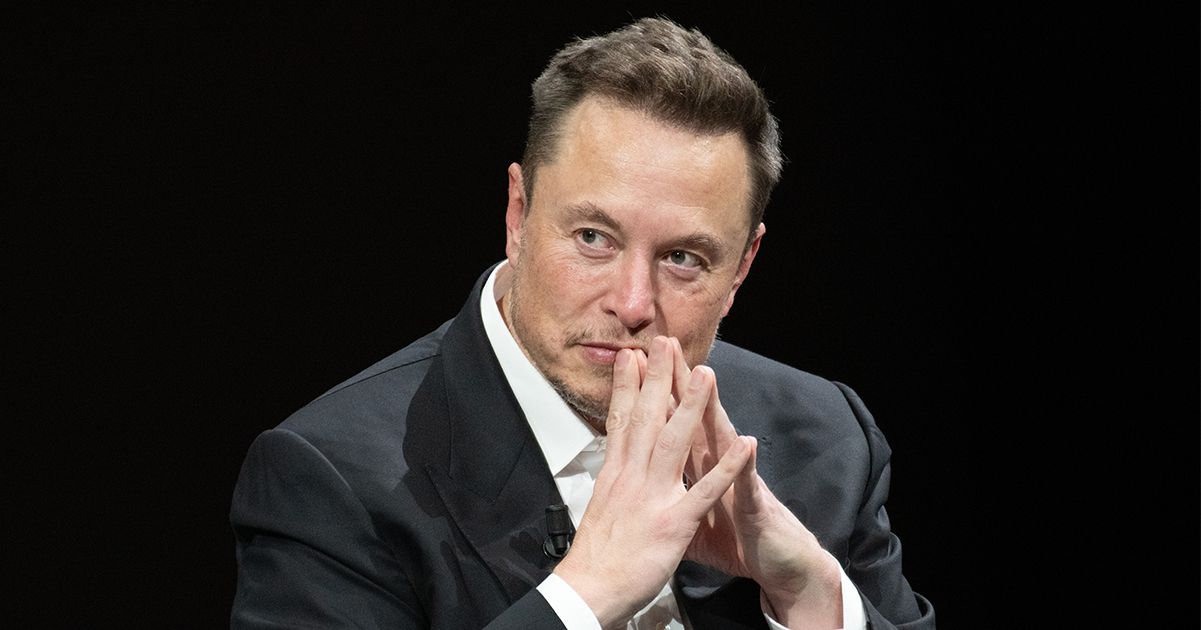

Billionaire entrepreneur Elon Musk has issued an urgent and unsettling warning regarding the future trajectory of artificial intelligence, asserting that humanity may have only a matter of months to prevent a catastrophic infrastructural bottleneck. Speaking candidly on a recent episode of the ‘Cheeky Pint’ podcast released on February 5, the Tesla and SpaceX chief executive detailed how Earth is rapidly hurtling toward its absolute physical boundaries when it comes to generating the electricity required to fuel the explosive expansion of modern artificial intelligence. According to Musk, unless global technological architecture begins pivoting into orbit, our planet risks sliding into obsolescence within a mere few years. This stark assessment underscores a growing friction between digital innovation and physical realities, transforming the conversation surrounding artificial intelligence from software algorithms into an existential race for electrical power generation.
The core constraint plaguing the artificial intelligence revolution is not computational brilliance, but rather the sheer, unyielding demand for raw electricity. Musk emphasized this limitation by highlighting the scale of current American energy consumption during his podcast appearance with Dwarkesh Patel. “All of the United States currently uses only about half a terawatt of power on average,” Musk stated, before putting the challenge into stark perspective. “Imagine trying to build enough power plants to double that. People don’t realise how hard that actually is.” Modern hyper-scale data centers, specialized neural network hardware, and sophisticated liquid cooling systems demand massive, uninterrupted energy supplies. Because terrestrial power generation, transmission line construction, and environmental permitting move at a glacial pace compared to software iterations, Musk warns that Earth simply cannot expand its electrical grid fast enough to satisfy the hunger of next-generation artificial intelligence models.
Faced with an impending terrestrial grid collapse, Musk argues that the ultimate solution lies far beyond the atmosphere. He offered a remarkably compressed timeline for this cosmic migration, predicting that space will soon emerge as the most economical and practical destination for large-scale technological deployment. “My prediction is that by far the cheapest place to put AI will be space in 36 months or less, maybe 30 months,” Musk remarked during the podcast interview. “Less than 36 months, mark my words.” This forward-looking projection aligns closely with regulatory maneuvers already underway. According to reports from Scientific American, Musk’s aerospace company filed official plans with United States regulators on January 30, 2026, outlining a staggering proposal to deploy up to one million satellites designed to form massive, solar-powered data centers in low Earth orbit.
 News22 Visual Archive • In-Depth Coverage
Unpacking the Important Context Behind This Story
Moving supercomputing clusters off-planet offers monumental thermodynamic and economic advantages that terrestrial facilities can never replicate. In the vacuum of space, solar panels receive unhindered, continuous solar radiation, completely liberated from the disruptions of nighttime cycles, inclement weather, and atmospheric scattering. Musk pointed out that orbital solar arrays can generate roughly five times the power yield of equivalent surface-mounted panels. Furthermore, operating in orbit eliminates the staggering economic hurdle of battery storage. “Solar cells are already very cheap, around 25 to 30 cents a watt in China,” Musk explained. “Put them in space and it’s effectively 10 times cheaper because you don’t need batteries. Once launch costs drop, space becomes the most scalable place to generate AI, and it’s not even close.” By removing the financial and logistical burden of massive chemical battery installations, orbital infrastructure slashes overall system complexity.
The sheer magnitude of a one-million-satellite network represents an unprecedented leap in orbital architecture. To put the ambition into perspective, humanity currently maintains approximately 15,000 satellites orbiting Earth, a figure that includes more than 9,600 active Starlink spacecraft operated by SpaceX. Expanding this fleet into a million-strong armada of orbital data centers would fundamentally redefine humanity’s presence in space. It would allow technology companies to scale artificial intelligence and conversational chatbots infinitely without imposing crippling demands on local electrical utilities or driving up consumer electricity rates. This strategy directly addresses the mounting environmental and infrastructural anxieties voiced by global governments and utility operators who currently struggle to balance grid stability against aggressive municipal climate targets.
 News22 Visual Archive • In-Depth Coverage
Elon Musk Issues Dire Warning: Humanity Has Months to Move AI Infrastructure to Space
The Wider Significance of Today’s Developments
Musk, who established his artificial intelligence venture xAI in 2023, frames the dilemma in stark macro-physical terms, pushing observers to evaluate energy consumption on a cosmic scale. “You start thinking in terms of what percentage of the sun’s power you’re harnessing,” he noted, emphasizing that true scalability requires looking past the confines of our home planet. While critics and industry competitors may view the three-year orbital timeline as hyper-ambitious, Musk’s track record in reusable rocketry and rapid satellite deployment demands serious consideration. As terrestrial power grids strain under the weight of surging digital demands, the billionaire’s blueprint suggests that the next industrial revolution will not take place in Silicon Valley office parks, but in the silent expanse of outer space.
Constitutional Succession and the Widow’s Protocol: Melania Trump’s Future After the White House