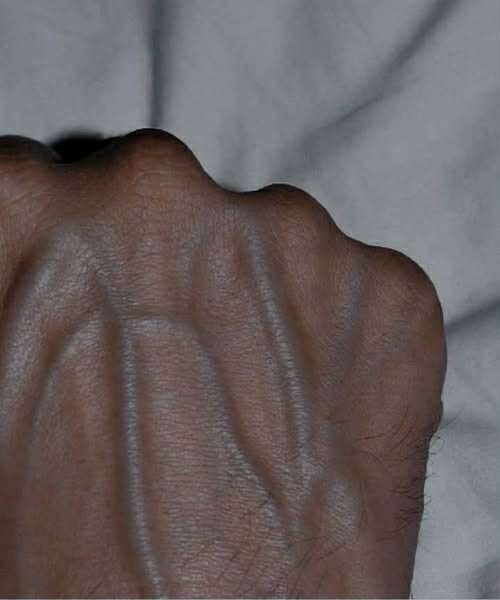
Have you ever caught a sudden glimpse of your hands or legs in a certain light and noticed a complex network of blue or green lines that seemed far more prominent than they were just a few short months ago? For many people, the unexpected appearance of bulging or highly visible veins can be a source of immediate internal anxiety, leading to a lot of questions about what is happening beneath the surface. You might find yourself wondering if this is a positive sign that your cardiovascular system is working at its peak performance, or if your body is trying to warn you of a silent, underlying health issue. While we often view our skin as a solid, opaque barrier, it is actually a translucent window into the complex hydraulic system that keeps us alive every single day.
In the majority of cases, a “vascular” look is simply a benign byproduct of life’s natural rhythms—such as the effects of aging, changes in fitness, or even shifts in the weather. However, because our veins serve as the primary return highways for our blood, their physical appearance can occasionally serve as an important early warning system for your overall circulatory health. Understanding the subtle nuance between a healthy “pop” and a genuine medical red flag is essential for anyone looking to maintain their long-term vitality. By paying closer attention to these changes, you can better distinguish between normal physiological adaptations and potential signs that your body needs professional attention.
- Natural Rhythms: Factors like aging and fitness levels often make veins appear closer to the surface.
- Environmental Impact: Changes in weather can cause veins to expand and become more noticeable.
- The Return System: Veins act as the main highways for blood returning to the heart, making them vital indicators of health.
- Vitality Monitoring: Recognizing the difference between normal vascularity and warning signs is key to staying healthy.
1. The Architecture of the Return Trip: Why Veins Stand Out
To understand why your veins are suddenly making a more pronounced appearance, we have to look closely at their unique biological role within the body. Unlike arteries, which are built with thick walls and are buried deep within the musculoskeletal structure to carry oxygenated blood away from the heart under intense, high pressure, veins have a much more difficult and physically demanding job. They function as the body’s “return vessels,” responsible for fighting the constant pull of gravity to move deoxygenated blood from your extremities all the way back to the heart. This uphill journey requires a delicate balance of pressure and flow, making the veins much more susceptible to being seen than their deeper, high-pressure counterparts.
Because veins possess significantly thinner walls and sit much closer to the superficial surface of the skin, they are highly sensitive to both internal shifts in blood pressure and external environmental changes. When the total volume of blood in your system increases, or when the density of the surrounding tissue changes, the veins have no choice but to expand or become more visible against the underside of the skin’s barrier. This increased visibility is often a direct reaction to the vein stretching or being pushed outward, acting as a visible indicator of the circulatory work happening just beneath the surface.
Environmental Response: External factors and changes in the surrounding body tissue can force veins to expand and “pop” against the skin.
Biological Role: Veins act as the primary return vessels, transporting blood against gravity back to the heart.
Structural Differences: Unlike thick, deep-set arteries, veins have thin walls and a more superficial placement.
Internal Sensitivity: Veins react quickly to fluctuations in blood pressure and the volume of blood being moved.
2. The “Healthy Glow” of Vascularity: Common and Harmless Triggers
In many social circles, particularly within the dedicated fitness community, highly visible veins—often referred to as “vascularity”—are viewed as a definitive badge of honor and a sign of physical health. Here are the most common reasons your veins might be standing out that are perfectly normal and have absolutely nothing to do with disease or underlying illness:
1. The Result of Physical Excellence and Low Body Fat
The most frequent reason for veins becoming more visible is simply a lack of “padding” between the vein and the skin. Subcutaneous fat is the layer that sits directly between your muscle tissue and your skin; when this specific fat layer is thin—whether through intense athletic training, rapid weight loss, or a naturally high metabolism—the veins have nowhere to hide. For bodybuilders and endurance athletes, this highly vascular look is considered a sign of “peak conditioning,” showing that the body is lean and the muscles are well-defined.
2. The Natural Maturation of the Skin
As we journey through life, our skin undergoes a significant structural transformation that affects how we see what lies beneath. We naturally lose collagen and elastin over time, which are the essential proteins responsible for keeping our skin thick, firm, and bouncy. As the skin thins out and becomes more translucent with age, the underlying vascular network naturally becomes more apparent to the naked eye. This increased visibility isn’t a sign of illness, but rather a natural “thinning of the veil” that occurs as the body matures.
3. The Thermoregulation Response
Our bodies are master temperature regulators, constantly working to maintain a safe internal environment. When you are in a hot environment or exercising intensely, your body needs to dump excess heat to prevent overheating. It achieves this through a process called vasodilation—widening the veins near the surface of the skin so that the blood can be cooled more effectively by the outside air. If you notice your veins bulging specifically on a humid summer day, your body is simply working exactly as intended to keep your core temperature stable.
4. The Genetic Blueprint
Sometimes, the reason your veins stand out is simply written in your DNA. Some individuals are born with naturally more superficial venous structures or have much fairer skin tones that make the blue-green tint of deoxygenated blood much more obvious. If your parents or grandparents were known for having prominent “hand veins” or visible lines on their legs, chances are very high that you will inherit those same physical traits as part of your genetic blueprint.
Genetic Inheritance: Your skin tone and vein depth are often determined by family history.
Low Body Fat: Reduced subcutaneous fat makes veins appear more superficial and defined.
Aging Process: Loss of collagen and skin elasticity makes the “veil” thinner over time.
Heat Response: Vasodilation is a healthy cooling mechanism that causes veins to expand.
3. When the Map Changes: Identifying Medical Red Flags
While the vast majority of vascular changes you notice are purely cosmetic or related to lifestyle, there are critical moments when your veins are effectively screaming for professional medical attention. When the fundamental structural integrity of a vein or the delicate one-way valves housed inside them begins to fail, it creates a “backup” of fluid pressure within the vessel. This internal congestion is not just an aesthetic issue; it can become dangerous to your systemic health if the root cause is left unaddressed for an extended period.
Chronic Venous Insufficiency (CVI) and “Pooling”
Your veins are equipped with tiny, sophisticated one-way valves designed specifically to prevent blood from flowing backward toward your feet. If these valves become weakened or damaged, they lose their ability to seal properly, and blood begins to “pool” or collect in the lower extremities due to gravity. This pathological backup causes the veins to not just become visible, but to feel heavy, achy, and look significantly swollen. You may notice that your legs feel increasingly tired by the end of the day, a hallmark sign that your circulatory return trip is struggling.
The Dangers of Varicose and Twisted Veins
Varicose veins represent a condition that is far more serious than a simple beauty concern. These are veins that have become permanently enlarged, dilated, and twisted because of consistently high internal pressure that has compromised the vessel wall. Beyond their bulging appearance, they can become intensely itchy and painful to the touch. If the circulation in that specific area remains restricted or stagnant for too long, it can lead to more severe complications, such as noticeable skin discoloration or the development of painful venous ulcers.
Superficial Thrombophlebitis vs. DVT
If a specific vein feels unusually hard to the touch—almost like a firm, unyielding cord beneath the skin—and the area above it is red, warm, and tender, you may be experiencing a small blood clot in a superficial vein. While this condition, known as superficial thrombophlebitis, is uncomfortable, it is usually less immediately life-threatening than Deep Vein Thrombosis (DVT). DVT occurs in the deep “trunk” veins of the leg and constitutes a true medical emergency. If you experience sudden, one-sided swelling in a limb accompanied by intense pain and localized warmth, you must seek medical help immediately, as these deep clots have the potential to break loose and travel to the lungs.
Emergency Indicators: Sudden, painful, one-sided swelling is a primary red flag for DVT and requires urgent care.
Valve Failure: Weakened valves lead to Chronic Venous Insufficiency, causing blood to pool in the legs.
Structural Damage: Varicose veins are permanently twisted and enlarged, carrying a risk of skin ulcers.
Superficial Clots: Hard, cord-like veins with redness often indicate localized inflammation or minor clotting.
4. Temporary Triggers: The “In-Between” Factors
There are several scenarios where your veins might bulge temporarily due to the shifting demands of daily life. These aren’t necessarily “illnesses” or permanent conditions, but they are clear physical signs that your body is currently under a specific type of physiological stress or adapting to a significant internal change:
- Dehydration and Blood Viscosity: When you are low on fluids, your blood can become more viscous (thicker), and your skin can lose its natural turgor or fullness. This combination makes your veins look far more pronounced and “sunken” into the surrounding tissue.
- Hormonal Waves (Pregnancy & Beyond): Pregnancy is a major biological trigger for highly visible veins. To support a developing baby, a person’s blood volume increases by nearly 50%, putting immense pressure on the mother’s venous system. Similarly, menopause and menstruation can cause noticeable, though less dramatic, vascular fluctuations.
- The “Muscle Pump” of Strength Training: Lifting heavy weights creates a temporary “muscle pump,” where active muscles engorge with blood and expand, physically pushing the veins closer to the surface of the skin for a high-definition, vascular look.
5. Proactive Management: Keeping the Flow Smooth
If you are concerned about the appearance or the long-term health of your veins, you don’t have to wait for a clinical problem to arise. There are several “human-centric” lifestyle shifts that can bolster your circulatory health and keep your blood moving efficiently:
The Power of Compression
If your daily routine requires you to spend a significant amount of time on your feet, medical-grade compression stockings can be a game-changer. They provide the consistent external “squeeze” that your internal valves need to move blood upward against gravity more efficiently, preventing the heavy, achy feeling associated with long days of standing.
Elevation Therapy
At the end of a long, taxing day, spend 15 minutes with your legs raised above the level of your heart. This simple practice uses the natural force of gravity to assist your veins in draining any blood that has pooled in your lower extremities, reducing pressure on the vessel walls.
The “Motion is Lotion” Rule
Avoid the habit of sitting or standing in a static position for hours at a time. Simple movements, like performing calf raises at your desk or taking a short walk every hour, engage your “second heart”—the calf muscles—which are responsible for mechanically pumping blood back up your legs and into systemic circulation.
Nutritional Support for Vessel Walls
What you eat directly impacts the structural integrity of your veins. A diet rich in antioxidants and flavonoids—found abundantly in colorful berries and dark leafy greens—can help strengthen the walls of your blood vessels from the inside out, making them more resilient to the pressures of daily life.
- Compression: Provides external mechanical support to assist struggling venous valves.
- Elevation: Uses gravity to drain stagnant blood and reduce lower-body swelling.
- Movement: Activates the calf muscles to act as a secondary pump for the circulatory system.
- Nutrition: Flavonoids and antioxidants serve as the building blocks for strong, healthy vessel walls.
. The Emotional Landscape of Vascularity
It is vital to acknowledge that how we perceive the sudden visibility of our veins is often deeply intertwined with our psychological self-image and personal identity. For some individuals, particularly those in the bodybuilding or athletic communities, highly visible veins are a source of immense pride—a physical “badge of honor” that serves as a tangible sign of hard work in the gym, disciplined nutrition, and a lean, high-performance physique. Conversely, for others, the appearance of these blue or green lines can feel like an unwelcome aesthetic shift, often perceived as a sign of aging, “wear and tear,” or a loss of the smooth skin of youth.
While modern medicine offers a wide variety of sophisticated cosmetic solutions—ranging from Sclerotherapy (which uses tiny, targeted injections to close off and fade unsightly superficial veins) to advanced Laser Therapy—it is important to prioritize function over form. The most critical step in managing your vascular appearance is ensuring that your internal “plumbing” is structurally sound and healthy before you begin worrying about the “paint job.” Addressing the underlying circulatory efficiency ensures that any cosmetic improvements are built on a foundation of genuine physical wellness rather than just surface-level aesthetics.
- The Pride of Performance: For athletes, vascularity is a visual marker of low body fat and high muscular engagement.
- The Aging Perspective: Many view visible veins as a natural part of the “thinning of the veil” that comes with a life well-lived.
- Cosmetic Interventions: Treatments like Sclerotherapy can remove superficial “spider veins,” but they do not fix deep circulatory issues.
- Functional Priority: Medical professionals always recommend confirming healthy blood flow before pursuing elective aesthetic procedures.
Conclusion: Listening to Your Body’s Internal Highways
In the vast majority of instances, your increasingly visible veins are simply a living testament to the life you are currently leading—a reflection of your fitness levels, your chronological age, and your unique genetic makeup. They are the silent, tireless workers of your circulatory system, perpetually moving life-giving, deoxygenated blood against the constant, unrelenting pull of gravity to keep your heart and lungs fueled. Your veins are not just static lines; they are dynamic, responsive structures that adapt to every heartbeat and every environmental shift you experience.
However, being truly “body-aware” means developing the intuition to know exactly when a physical change is actually a localized message from your system. If your visible veins are ever accompanied by persistent pain, sudden and unexplained swelling, or a chronic feeling of heaviness that doesn’t resolve with rest, it is time to treat your body with the respect it deserves and consult a vascular professional. By paying close attention to these blue-tinted maps beneath your skin, you aren’t just looking at your external appearance—you are performing a vital check-in on the very core of your physical health and systemic longevity.
Proactive Health: Checking your veins is a simple, non-invasive way to monitor your cardiovascular resilience.
A Living Record: Your veins reflect your history, from your DNA to your daily hydration and exercise habits.
The “Heavy” Warning: Persistent heaviness in the limbs is a primary signal to seek a professional circulatory evaluation.
Respect the System: Your “internal highways” deserve as much maintenance and attention as any other major organ system.