Chapter 1: The Rhythmic Hum of Abandonment
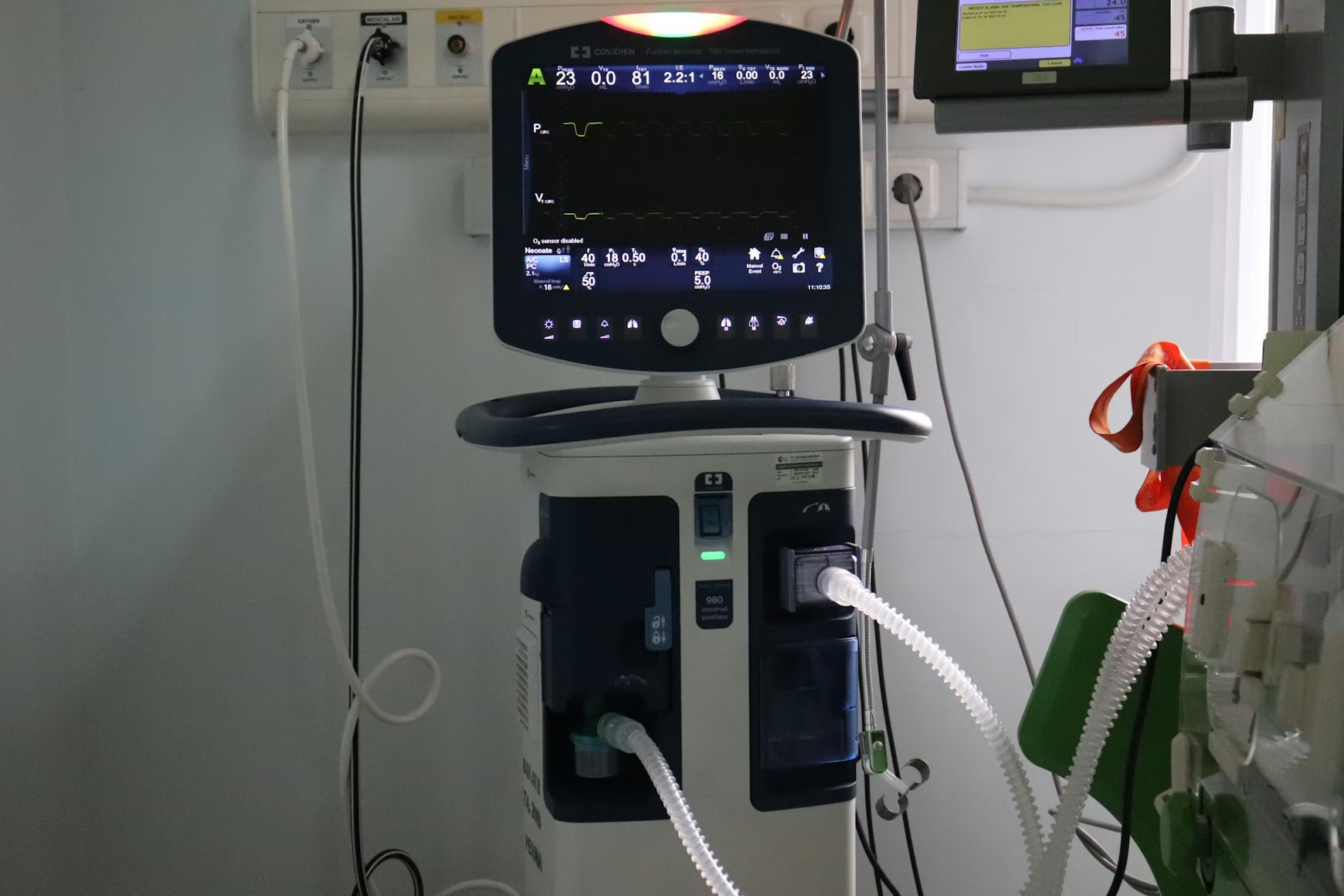
There is a specific kind of silence that settles over your life when you become chronically ill. It isn’t the peaceful quiet of a Sunday afternoon; it is a heavy, suffocating stillness that occurs when the world moves on without you. At thirty-eight, I found myself tethered to a machine that hummed with a clinical, rhythmic persistence, filtering my blood because my own body had surrendered.
Kidney failure doesn’t just steal your health; it strips away your social fabric. For four years, I existed in a state of survival that most people couldn’t—or wouldn’t—witness. In that time, I learned a bitter truth: most people’s “unconditional love” comes with a very clear set of conditions, and one of those conditions is that you remain convenient to care for.
The Vanishing Act
My daughter, Rachel, was the first to fade. In those early, terrifying weeks of my diagnosis, she played the part of the devoted daughter. She showed up twice. The first time, she sat by my bed, her eyes darting to her smartphone every few minutes as if it were a life raft. She made polite, strained conversation about the weather and her kids, but I could feel her discomfort vibrating in the air. To her, I wasn’t her father anymore; I was a frightening glimpse into a future she wasn’t ready to face.
The second time, she stayed for thirty minutes. She blamed the traffic, the soccer schedule, and the sheer distance between her manicured suburban life and the sterile, white-tiled reality of the medical district. Eventually, the distance became an ocean. The calls turned into texts, and the texts turned into silence, punctuated only by a yearly birthday card that felt more like a receipt of a debt she no longer wanted to pay.
Then there was Derek, my son. He made a single appearance, a twenty-minute cameo in which he barely looked up from his screen. He was physically in the room, but he was miles away, shielded by his digital world. He left before the machine had even finished its first cycle, citing an “important meeting.” I never saw him again. My ex-wife, Linda, maintained a cold, floral distance, sending grocery-store bouquets that arrived thirsty and dying—a perfect metaphor for what was left of our connection.
The Shadow in the Hallway
I was drowning in a sea of indifferent relatives and rising medical bills when Marcus Williams appeared.
Marcus was fifty-eight, a man who moved with the measured, deliberate pace of someone who had seen the worst of the world and decided to respond with kindness. He was a veteran, a widower who still spoke to his late wife in the quiet moments of the night, and a night-shift custodian.
While the rest of my world was sleeping or making excuses, Marcus was working. He spent ten hours every night scrubbing the very floors I walked on, sanitizing the rooms where I suffered. He did the invisible work that keeps a hospital breathing, and then, instead of going home to sleep, he stayed for me.
The First Encounter
I remember the first time he sat down in that uncomfortable, cracked vinyl chair next to my station. I was already hooked up, the tubes snaking from my arm, my spirit at its lowest ebb. I watched him settle in, pulling a battered, olive-drab thermos from his bag and a thick historical novel about the battle of Midway.
I looked at him, truly confused. I assumed he was a lost visitor or perhaps a volunteer who had been assigned to the wrong bay.
“I think you’re in the wrong spot, sir,” I managed to say, my voice raspy from the fatigue that lived in my bones.
Marcus didn’t jump up or look embarrassed. He just unscrewed the cap of his thermos, the smell of scorching black coffee cutting through the scent of antiseptic. He gave me a smile—not a pitying smile, but one of solid, unwavering recognition.
“I’m here to keep you company,” he said. His voice was like low-frequency radio, steady and calming.
I blinked at him, my mind trying to find the catch. “We don’t even know each other,” I countered. “I’m just a guy in a chair. You should be home in bed.”
Marcus opened his book, his thumb marking a page of history. “Well,” he said softly, “we know each other now. And as for sleep—it’ll still be there when we’re done here. I’ve found that the hardest part of a long march isn’t the weight of the pack, but the feeling that you’re marching alone. I don’t much care for people marching alone.”
The Four-Year Vigil
That was the beginning. For four years, Marcus became the only constant in a life that was falling apart. He was there during the blizzard of 2019, when the city was a white tomb and even the ambulances struggled to clear the drifts. I expected a call saying he couldn’t make it. Instead, at 5:45 AM, his old truck rattled into my driveway, his headlights cutting through the snow like twin suns.
He never complained about the exhaustion that turned his eyes bloodshot. He never mentioned the back pain from ten hours of mopping. He simply sat. He read his books, he shared his coffee, and he provided a presence that felt sacred. In the sterile silence of the dialysis center, Marcus Williams wasn’t just a driver or a friend; he was the person who proved that I was still worth a sacrifice.
Chapter 2: The Silent Architect of Survival
The “not yet” Marcus had uttered four years ago hadn’t just been a refusal to leave the room; it had been a vow. As the months bled into years, our bond had moved past the superficial. I learned the rhythm of his life—the way he took his coffee black and scorching, a habit from cold mornings in motor pools during his service. I learned about his children on the coasts, distant but loved, and the profound, echoing silence left behind by his wife, Jennifer.
Marcus didn’t just show up; he integrated himself into the machinery of my survival. He became an expert in a field he never asked to study. He knew my potassium levels better than I did. He brought me low-sodium meals he had prepared in his own kitchen, seasoned with herbs instead of the salt that acted like poison to my system. While my own children, Rachel and Derek, couldn’t be bothered to remember which floor the dialysis unit was on, Marcus was busy reading medical journals to find snacks I was actually allowed to enjoy.
The Anchor in the Storm
He was the one who held my hand when my blood pressure bottomed out last July. I remember the frantic beeping of the monitors, the blurred white coats of the nurses, and the cold, metallic taste of fear in my mouth. My emergency contact was Rachel. The hospital called her three times. She never picked up.
But I didn’t need her to. Marcus was there. His hand was a warm, calloused anchor in a world that was trying to drift away. He didn’t panic. He just held on, his presence a silent command to my heart to keep beating.
The Card and the Question
On the four-year anniversary of my first treatment, Marcus handed me a card. His handwriting was precise—the hand of a man who respected order. “Four years of fighting. I’m honored to witness your strength,” it read.
I felt a sudden, sharp pang of guilt. I looked at his red-rimmed eyes and the way his shoulders slumped after a ten-hour shift of manual labor.
“You don’t have to do this anymore, Marcus,” I said, my voice thick. “You’ve given me enough. You don’t owe me your life.”
That was when the first layer of the truth was peeled back. He told me about Jennifer. He told me about the kidney she never received, the three years she spent fading away in a chair just like mine. But the most haunting detail was the book.
The day he saw me, I was reading a specific edition of a book about Gettysburg. It wasn’t just the same title Jennifer had been reading when she died; it was the exact same cover, the same worn spine. He had seen my bookmark on the very page where hers had stopped forever. To Marcus, I wasn’t just a stranger; I was a second chance at a story that had ended in tragedy.
The Directed Miracle
Yesterday, the world changed. A woman I’d never met, Dr. Elizabeth Chen, walked up to my station. She spoke with that calm, clinical detachment that surgeons use to deliver news that shatters your reality.
“A kidney has become available,” she said.
The words didn’t make sense. I was nowhere near the top of the list. I was a middle-aged man with a common blood type and no family to advocate for me. I started to tell her there was a mistake—that I was the invisible man of the medical district.
“This is a directed donation,” she explained, a small, knowing smile touching her lips. “Someone has specified that their kidney goes to you. Exclusively.”
The room seemed to shrink. The hum of the dialysis machines grew deafening. I turned my head slowly to look at Marcus.
He was sitting in the same vinyl chair he had occupied for four years. He had his thermos. He had his history book. But for the first time in our history, he wouldn’t look at me. He was staring intensely at a paragraph he’d likely read three times already. His jaw was set, and his knuckles were white where they gripped the edge of the paperback.
The Weight of the Gift
In that moment, the “not yet” from four years ago took on a terrifying, beautiful new meaning. Marcus hadn’t just been waiting for me to get better; he had been waiting for the right moment to save me himself.
“Marcus?” I whispered. The name felt heavy, like a prayer.
He finally looked up. There was no boastfulness in his eyes, no pride. There was only the same steady, quiet resolve I had seen during the blizzard of 2019 and the blood pressure crash of last summer.
“Jennifer couldn’t wait any longer,” he said softly, his voice cracking just enough to show the man beneath the veteran. “But you can’t wait either. I’ve spent four years watching you fight. I’m not going to let you lose this battle because of a list.”
I looked at this man—this “stranger”—who was prepared to go under the knife, to give up a part of his own body for a man his own children had abandoned. It was a level of devotion that felt almost impossible to process.
But as I looked at him, I realized the revelation wasn’t over. Dr. Chen was still standing there, and there was a shadow of something else in her expression—something that suggested the “directed donation” wasn’t the only secret being kept in this room.
Chapter 3: The Ghost in the Driver’s Seat
The silence that followed Marcus’s confession was absolute, a heavy, airless vacuum that seemed to swallow the clinical beeping of the monitors. I sat in my hospital bed, the white sheets pulled tight, looking at the man I thought I knew.
For four years, I had viewed Marcus as a saint, a man of supernatural kindness. Now, I saw him as a man in a cage of his own making, a man who had spent 1,460 days trying to outrun a few seconds of exhaustion.
The revelation didn’t just change my view of Marcus; it remapped my entire past. The accident—the “minor” fender bender Jennifer had mentioned years ago, the one we thought was just a stroke of bad luck—was the invisible thread that had been pulling our lives together all this time.
Marcus sat in the visitor’s chair, his head bowed, his shoulders shaking with the weight of an eight-year-old secret. He wasn’t the “Best Friend” I had imagined. He was a man performing a decade-long act of penance.
The Architect of a Debt
“I didn’t just see you that day at the clinic,” Marcus whispered, his voice jagged and raw. “I looked for you. I waited for your name to show up on the logs. When I saw you sitting there, reading Jennifer’s book… it felt like she had reached out from the grave and grabbed me by the throat.”
Every kindness he had shown me over the last four years—the scorching coffee, the low-sodium meals, the drives through blizzards—now felt different. It wasn’t just friendship; it was a desperate, daily attempt to pay back a debt that could never be settled. He had watched my wife die because of his mistake, and he had decided, with a terrifyingly singular focus, that he would not let the same happen to me.
“You were driving the truck,” I said, the words feeling like stones in my mouth.
“I was tired,” Marcus replied, finally looking up. His eyes were swimming with a grief so profound it made my own illness feel small. “I was just so tired. I closed my eyes for five seconds, and I took her life. I didn’t just clip her car, I clipped her future. And then I found out I’d clipped yours, too.”
The Ultimate Sacrifice
For four years, while I was sleeping or fighting through the brain fog of dialysis, Marcus had been living a double life. He wasn’t just a custodian; he was a candidate. He had undergone dozens of blood tests, psychological evaluations, and physical screenings. He had turned his own body into a temple of health just so he could eventually harvest a piece of it to replace what he had broken.
“The doctors said I was a match,” he said, a ghost of a smile appearing on his face. “A near-perfect match. Like it was meant to be. Like I was born with two kidneys just so I could give one back to you.”
The sheer scale of his commitment was staggering. He had spent years being the “Perfect Stranger” just to earn the right to save my life. He hadn’t sought my forgiveness because he didn’t believe he deserved it. He had sought my survival because it was the only thing that could keep his own soul from disintegrating.
The Biological Storm
As the reality of Marcus’s sacrifice began to sink in, the outside world—the world of my biological family—began to intrude. Word of the “miracle donor” had reached my daughter, Rachel.
She arrived at the hospital an hour later, breathless, her expensive handbag clutched to her chest. She looked at me, then at Marcus, whom she had met only in passing during the rare times she bothered to visit.
“Dad, I heard,” she said, her voice high and fluttering. “A donor? A directed donation? Who would do that? We need to know who this person is, we need to make sure everything is… legal.”
She looked at Marcus with a flicker of suspicion, seeing only a night-shift custodian in her father’s room. She didn’t see the man who had held my hand when her phone went to voicemail. She didn’t see the man who had driven through the blizzard of 2019.
I looked at my daughter—my flesh and blood who had found the drive to the clinic “inconvenient”—and then I looked at Marcus, the man who was about to go under the knife for me.
The Weight of Forgiveness
“The donor is right here, Rachel,” I said, my voice steadier than it had been in years.
The room went cold. Rachel stared at Marcus, her mouth slightly open. The irony was a jagged blade; the stranger her father had “befriended” was doing the one thing she and her brother had never even considered.
Marcus stood up, his posture regaining that military stiffness. He didn’t look at Rachel. He looked only at me.
“I don’t expect you to understand,” Marcus said to me. “And I don’t expect you to forgive me. But tomorrow morning, I’m going into that operating room. Whether you hate me or not, you’re getting that kidney. You’re going to live, because Jennifer should have lived.”
He walked toward the door, pausing only for a second. “I’ll see you on the other side,” he said.
As he left, I realized that I didn’t feel anger. I felt a strange, overwhelming sense of peace. Marcus hadn’t just been keeping me company for four years; he had been teaching me what love actually looks like. It isn’t a birthday card or a text message. It’s the willingness to be hollowed out so that someone else can be made whole.
The freedom didn’t feel like a sudden explosion of joy; it felt like a quiet, steady warmth spreading through my limbs. For the first time in nearly half a decade, I woke up without the metallic tang of toxins in my mouth. I woke up without the bone-deep dread of the next four-hour cycle. I woke up, quite literally, with the lifeblood of Marcus Williams flowing through me.
The recovery ward was a place of hushed whispers and the soft squeak of nurses’ shoes on linoleum. Marcus and I were placed in rooms just down the hall from one another. In those first few days, the physical pain was a sharp, biting reminder of the exchange that had taken place. Every time I felt the pull of the stitches in my abdomen, I thought of the matching incision on Marcus’s side. We were no longer just two men tied together by a tragic accident and a thermos of black coffee; we were biologically intertwined.
While Marcus was recovering in a haze of post-surgical fatigue, my biological family made their inevitable reappearance. Rachel and Derek showed up together this time, bringing a frantic energy that felt entirely out of place in the quiet of the transplant wing. They brought expensive balloons and “Get Well” bears, trying to overcompensate for four years of calculated absence.
“It’s a miracle, Dad,” Derek said, pacing the room while checking his watch. “I mean, who would have thought that custodian guy was such a match? It’s almost creepy, right?”
“It isn’t creepy, Derek,” I said, my voice thin but firm. “It’s a sacrifice. Something you wouldn’t recognize.”
Rachel tried to smooth things over, her voice dripping with that practiced suburban concern. “We just want to make sure you’re protected, Dad. Now that you’re healthy, we should talk about your living arrangements. Maybe moving closer to us…”
I looked at them—really looked at them. They weren’t there for me; they were there because the “inconvenience” of my illness had been replaced by the “success” of my recovery. I was a person again, and therefore, I was an asset they wanted to claim.
“I’m not moving,” I told them. “And I don’t need your balloons. What I needed was a ride to the clinic when it was snowing. What I needed was a hand to hold when I thought I was dying. Marcus gave me those things. He gave me his life. You gave me a birthday card that was a week late.”
The silence that followed was the first honest moment we’d had in years. They left shortly after, the balloons bobbing awkwardly behind them. They hadn’t even asked how Marcus was doing.
On the fourth day, I managed to shuffle out of my bed. Gripping my IV pole like a staff, I made the slow, agonizing trek down the hallway to Room 412.
Marcus was sitting up, staring out the window at the city he had spent decades cleaning. He looked smaller without his heavy work jacket, his hospital gown revealing the bandages wrapped around his torso. When he saw me, he didn’t offer a platitude. He just nodded toward the chair.
“Coffee’s terrible here,” he rasped, a ghost of his old humor flickering in his eyes.
“It’s not scorching enough,” I agreed, sinking into the chair.
We sat in silence for a long time, watching the sunset bleed orange and purple over the skyline. The weight of the secret—the truck, the center line, Jennifer—was still there, but it had changed shape. It was no longer a jagged rock in the road; it was a foundation.
“Marcus,” I said, looking at the steady rise and fall of his chest. “I meant what I said before the surgery. The debt is settled. You don’t have to show up at 5:00 AM anymore. You don’t have to carry Jennifer’s ghost in your passenger seat.”
Marcus turned his head, his gaze meeting mine. For the first time in four years, the bloodshot redness was gone from his eyes. He looked rested, despite the surgery.
“I’m not showing up because of the debt anymore,” he said softly. “I’m showing up because you’re the only person left who truly knows who I am. And I think… I think I’d like to see what a Tuesday looks like when we aren’t hooked up to a machine.”
The weeks turned into months. The recovery was arduous, involving a cocktail of anti-rejection meds and a new rhythm of life, but I was living. Truly living.
I still see Marcus three times a week. But now, he doesn’t pick me up in the dark. We meet at a small diner halfway between our apartments. He still drinks his coffee black and scorching hot. He still reads his historical novels, though now he buys two copies—one for him and one for me—so we can discuss the chapters over breakfast.
My family still calls occasionally, their voices filled with a distant, performative guilt. I answer, and I am kind, but I no longer wait for them. I no longer expect them to be the people they aren’t.
Marcus Williams took my wife’s life by accident, and he gave me mine by choice. We are a family of scars and shared history, a testament to the fact that sometimes, the person who breaks your world is the only one who knows how to put the pieces back together.
As we walked out of the diner this morning into the bright, clear light of a Tuesday, Marcus didn’t look back. He just adjusted his jacket, gripped his book, and started the march forward. And for the first time in my life, I wasn’t just following. I was walking right beside him.
Six months have passed since the sterile hum of the operating room was replaced by the quiet, steady rhythm of a functioning body. For half a year, I have lived without the metallic weight of toxins in my blood. I have woken up every morning and seen a horizon that isn’t bounded by the four walls of a dialysis center. I can taste salt again; I can travel past the city limits; I can breathe without the phantom weight of a machine on my chest.
But the most profound change isn’t in my kidneys; it’s in the way I view the world. I am living in a house built by a stranger’s sacrifice, and every brick is laid with the mortar of a complicated, beautiful forgiveness.
As the color returned to my cheeks, my biological family began to orbit back into my life. Rachel is the most constant now, her presence fueled by a frantic, weeping guilt that seems to consume her. She shows up with home-cooked meals and offers to take me on weekend trips, her voice often breaking into apologies for the four years she treated my illness like an inconvenient phone call she could simply ignore.
I haven’t told her the whole truth yet. I haven’t told her that the kidney keeping her father alive belonged to the man whose exhaustion caused the accident that eventually took her mother. I watch her thank Marcus with a polite, distant gratitude when they cross paths at my apartment, and I feel the weight of the secret pressing against my ribs.
I will tell her one day. I owe her the truth of her mother’s history. But for now, the truth is too sharp, and our reconciliation is still too fragile. For now, I let her believe in the simple miracle of a “kind stranger,” because she isn’t yet ready to understand a grace that is this heavy.
Marcus and I still have our Tuesdays. We meet at a diner where the vinyl booths are cracked and the air smells like onions and cheap grease. We sit in the corner, the “terrible coffee” between us like an old friend. Marcus is down to one kidney now, and he really shouldn’t be eating the silver-dollar pancakes he loves, but we’ve both decided that life is too short to spend it entirely in fear of the menu.
We recently drove out to the cemetery. It was a crisp, clear afternoon, the kind Jennifer used to love. We stood before her headstone—two men who had loved her in vastly different ways, and who had both, in their own time, let her down.
Marcus stood there for a long time, his military-straight posture finally softening. I watched his lips move in a silent confession. Later, as we walked back to the truck, he told me what he’d said: “I told her I’m taking care of you. I promised her I’d make sure you’re okay.”
In that moment, I realized that Marcus wasn’t just my donor; he was Jennifer’s final gift to me. And I was his final gift to her.
My family is back now, and I am grateful. I love my children, and I am glad they have returned to the fold now that loving me is “easy” again. But there is a sacred hierarchy in my heart that they will never understand. They were the ones who sent the late cards; Marcus was the one who drove through the blizzards. They were the ones who made excuses; Marcus was the one who made lunches.
He taught me that “showing up” is the most radical act of love a human being can perform. It isn’t found in the grand gestures or the public declarations; it’s found in the 5:00 AM darkness, in the scorching coffee from a battered thermos, and in the willingness to sit in a vinyl chair for four years just so someone else doesn’t have to face the dark alone.
Our relationship will never be simple. We are bound by a ghost and a scar. There will always be the shadow of that center line on a dark road eight years ago, and the agonizing irony that my survival is the byproduct of my greatest loss.
But as I sit across from Marcus today, watching him tally up our gin rummy scores in his little notebook, I don’t see a villain. I don’t even see a hero. I see a man. A fallible, exhausted, deeply human man who decided that his life would not be defined by his worst mistake, but by his longest atonement.
I wake up every morning and I am grateful. Not just for the kidney, and not just for the health, but for the friendship of Marcus Williams. He taught me that redemption isn’t something you find; it’s something you build, one early morning at a time. And as we finish our coffee and head out into the sunlight of a Tuesday we both earned, I know that Jennifer would be at peace. We are finally, both of us, okay.
I wake up every morning and feel the steady, silent work of a miracle beneath my skin. I am grateful—deeply, profoundly grateful—for the kidney that pulses with a life I nearly lost. But more than that, I am grateful for the friendship that sustained me when I was a ghost in my own life. I am grateful for the impossible, jagged, and beautiful truth that our deepest wounds do not have to be the end of our story. Sometimes, they are simply the ground where a new kind of healing begins.
This story is more than a medical miracle; it is a challenge. It forces us to look into the mirror and ask the hardest questions of the human heart. What would you do if you were in my shoes? Could you look at the person who caused your greatest tragedy and see a savior?
Forgiveness is often sold as a light, airy thing—a letting go of a burden. But the forgiveness I found with Marcus was heavy. It was a choice made in the wreckage of a life, a decision to stop punishing a man who had already spent a decade in a prison of his own guilt.
Could you forgive someone who hid the truth for years? It is easy to say “no” from the comfort of a healthy life. But when you have sat in a vinyl chair for four years and watched a man give up his sleep, his comfort, and his own body for you, the “truth” becomes more than a confession of a past sin. It becomes a testament to a present devotion. Marcus didn’t hide the truth to escape his debt; he hid it because he wanted to make sure he was worthy of paying it.
We want to hear your heart on this. This is a story of second chances that were earned in the dark, and we invite you to join the conversation.
- Could you find it in yourself to forgive a debt as large as this?
- Has there been a “Marcus” in your life—someone who showed up when everyone else found it too inconvenient to stay?
Head over to our Facebook page to share your thoughts. Let’s talk about the true meaning of “showing up,” the complexity of redemption, and how we can all be a little more consistent for the people who need us most.
If this journey has moved you, if it made you think of a friend who stayed or a family member you’ve missed, please share this story. We live in a world that often focuses on the terrible mistakes people make, but we rarely celebrate the extraordinary redemption they are capable of achieving.
Sometimes, the most powerful stories are the ones that remind us that no one is beyond saving—and that the person who broke your heart might just be the one the universe sends to help you put it back together.