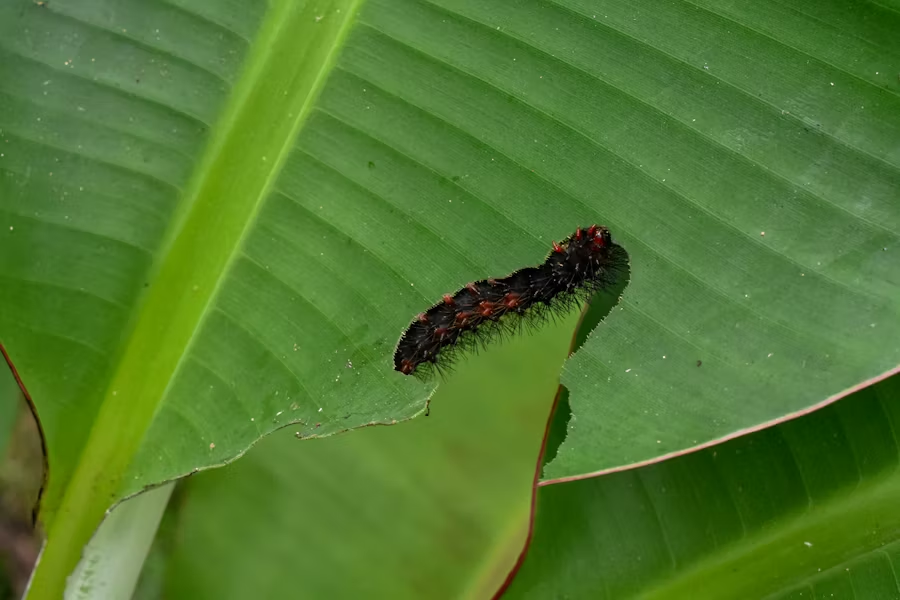
But as I stepped from the kitchen into the living room, I noticed something odd out of the corner of my eye. There, lying on the floor near the rug, was a bright green sliver — motionless, small, shaped almost like a broken piece of a plastic toy or maybe a fragment of a potted plant’s leaf.
At first, I thought nothing of it. My mind tried to fit it into the simplest possibilities: maybe a child’s lost toy, a scrap of old ribbon, a wayward piece of greenery from a houseplant. The shape was smooth. The color unnatural. The little protrusions on the sides looked like toy horns. Maybe a broken bit of some cheap trinket.
I leaned closer.
That’s when the world tilted.
The green “thing” trembled. Just slightly — a faint shudder that was enough to jerk me upright.
Heart pounding, I froze.
And then I saw it crawl.
It moved across the floor, not fast. Not darting like a bug, but colluding with silence: smooth, deliberate, utterly alien. Thin, dark spikes rose from its body — each one long and sharp, like miniature quills. The creature’s shape, its wriggling, reminded me of something from a sci-fi movie: not a benign bug, but a warning. An unspoken message: Don’t touch me.
My stomach twisted. Rage of fear, confusion, adrenaline.
I stumbled back, half-dropping the coffee mug on the table. I wanted to scream — but I didn’t. Instead I stood frozen, watching that strange insect inch toward the far wall.
In those seconds, millions of thoughts ricocheted in my mind.
Could it hurt me?
Could I pick it up safely?
What if I swiped it away and got stung?
It all came down to one gut reaction: this was wrong.
I backed away, grabbed my phone, and searched “bright green caterpillar venomous U.S.” The result cropped up almost instantly.
The name made my pulse in my temples: saddleback caterpillar.
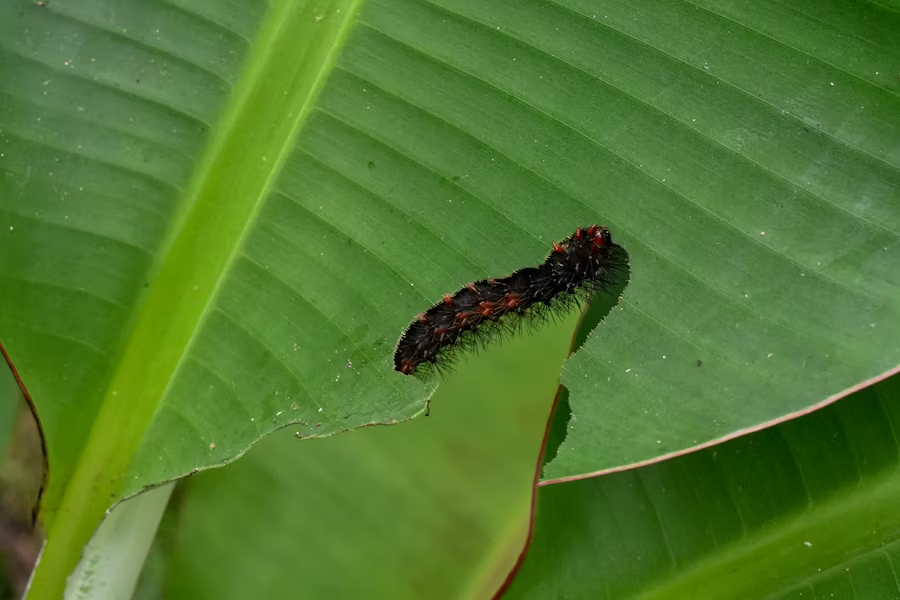
The words on the screen seemed to stare me down with urgency. According to recognized sources — university entomology departments, extension services — this small caterpillar, despite its slow movement and almost cartoonish appearance, was among the most venomous in North America.
The description matched perfectly: a plump, roughly one-inch-long body; a bright green “saddle” across its middle; brown ends; and rows of sharp, hollow spines along its sides and at both ends. These spines, I read, are connected to venom glands. And if they break off into human skin, the venom — even in tiny doses — can cause intense burning, swelling, blistering; sometimes more serious reactions like nausea, dizziness, and even vomiting.
Cold sweat ran down my neck. I felt a wave of relief — I hadn’t touched it. But I also felt a jolt of fear: how easily I could have been injured.
In the harsh spotlight of the screen, I realized how naive I’d been. I had nearly reached down, picked up what I thought was a toy or leaf — completely unaware that I was two inches from a creature capable of inflicting serious pain.
Then, a deeper realization settled in: I wasn’t the only one at risk. Children, pets, unsuspecting guests — anyone could make the same mistake.
I sat on the edge of the couch, my hands shaking slightly, and stared at the photo on my phone.
I knew what I had to do. But doing it safely meant shaking off the panic, gripping a little bit of calm, and treating this like a defusing operation.
I walked to the kitchen, grabbed a sturdy glass jar — the kind I used for iced tea — and carried it into the living room. I picked up the broom and a dustpan. I told myself, out loud: Just don’t touch it with your hands. Just gentle. Just sweep.
The caterpillar was still — almost menacingly so — but I didn’t hesitate. I nudged the broom bristles gently against its side. I pushed it, without pressure, across the floor.
It moved. Slowly, but it moved.
One sweep. Another. Quiet. Controlled.
It tumbled into the jar. I slapped a piece of cardboard over the top, held it tight, and carried it outside.
Outside, I released it into a dense shrub by the fence — far enough from the house and beyond easy reach.
I exhaled hard. The tension in my chest loosened.
I had done what needed to be done. No contact. No sting. No trip to the ER.
But as I stood there, the late-afternoon light closing in, I realized something even more important: I had learned. I had gained knowledge.
And that was powerful.
Unlike bees or wasps that deliver a sting purposefully, venomous caterpillars use passive defense. They don’t sting. They brush against you. Their spines — called urticating hairs — break off easily, embedding in skin and releasing venom.
Because the hairs are tiny and often transparent, you may not even see them. But the reaction? It can be immediate, sharp, and severe: burning pain, redness, swelling, blisters. In sensitive individuals, larger reactions — rash, nausea, weakness — are possible.
In fact, a compiled survey of stinging caterpillar cases in the United States revealed that the saddleback caterpillar (Acharia stimulea) is among the most commonly documented offenders.
And because they feed on many common trees and shrubs — oak, maple, hibiscus, crotons, houseplants, garden bushes — they’re not just a forest creature; they are a potential hazard for suburban backyards, porches, patios, flower pots, even indoor plants near open windows or doorways.
In short: they are everywhere people are.
I kept digging through the extension service bulletins and official guidance pages, reading about real cases reported by poison-control centers and emergency departments. What stood out most were the descriptions of the pain — often likened to a wasp or jellyfish sting. One extension agent said it “feels like being stung by a jellyfish,” a comparison that stuck with me long after I closed the tab.
Here’s how reactions typically unfold:
- Immediate sharp burning at the contact site. Pain often radiates outward.
- Within minutes, redness and swelling — often with welts or raised bumps.
- In many cases, blistering can occur. The spines may remain lodged under the skin, continuing to irritate even after the initial pain subsides.
- Some people report nausea, dizziness, headaches — systemic signs, not just localized irritation. Rarely, more serious reactions like allergic response, breathing difficulty, or anaphylaxis may appear — especially if the venom contacts mucous membranes (eyes, mouth) or enters sensitive tissue.
Because the spines are often microscopic, they can be difficult to detect. Many stung individuals don’t even realize what caused the pain — they just know something suddenly hurt, then burned, then throbbing.
Doctors treating such cases often report that patients mistake the symptoms for a spider bite, rash, chemical burn, or allergic reaction; misdiagnosis is common.
One consistent treatment technique stands out in every source: do not rub or scratch the area. Instead:
- Use adhesive tape (like duct tape or medical tape) to lift embedded spines out of the skin, pressing for a moment, then pulling gently. Repeat with fresh tape until no more spines appear.
- Wash the area gently with soap and water.
- Apply a cold compress or ice pack to reduce swelling and soothe pain.
- Use a topical anti-itch or corticosteroid cream if needed, or take an oral antihistamine if there’s significant itching or swelling.
- If symptoms worsen — spreading rash, severe swelling, breathing difficulty — seek medical attention immediately.
Many people recover fully within a day or two if the spines are removed and treated promptly. But delay or improper handling can increase pain, prolong irritation, or even require hospital care — especially for people with allergies or preexisting sensitivity.
I’ve replayed the moment a thousand times since then. Wandering barefoot. Seeing a bright green “leaf.” Leaning forward. Reaching out.
If I had made that wrong move, I might have ended up with a burned, blistered hand — maybe worse. Who knows. Weeks of pain, doctor visits, scar tissue. All for the price of a second of curiosity.
And here’s why I now believe this isn’t just my story.
Because backyard gardens, front porches, hanging plants, shrubs — they don’t belong to forests. And yet these caterpillars don’t distinguish. They live where trees and shrubs grow, but they also crawl onto potted plants, railings, doorsteps, even screens or windowsills.
We forget how close we live to “nature.” How a warm Georgia August evening or a humid summer afternoon can bring the wild right to your front door.
So maybe it’s not enough to tell people: don’t touch spiders, wasps, snakes, or scorpions. Maybe we need to add: “and look twice before you touch that odd green thing by the plant pot.”
After putting the caterpillar outside, I did something a little silly — but deeply symbolic. I hooked a small sticky-note map onto the back of my front door. On it, I wrote: “Look Before You Touch” in big block letters.
Every time I walk into the house carrying laundry, or coffee, or groceries — I see those words. I think of the little green caterpillar, the horror that could have been, and the tiny miracle that it wasn’t.
I started wearing flip-flops even indoors, checking the floor before sitting or putting my hands down. I keep a dustpan and jar by the back door — for unexpected guests with too many legs.
But I also learned to respect the small, quiet parts of nature. I stopped assuming that all caterpillars are harmless. I started reading signs: bright colors, spikes, weird shapes. I learned that beauty isn’t always safe.
And maybe most important — I learned that knowledge is a shield.
Maybe to you it sounds dramatic — an overreaction to a bug. But consider these facts:
- Many venomous caterpillars share the same traits: bright warning colors, spines or hairs, slow movement. They are often overlooked precisely because they don’t act aggressively.
- The injuries they cause are real, painful, and can escalate if not treated properly — and that includes risks beyond local skin pain: nausea, dizziness, even anaphylactic reactions in rare cases.
- They are often found near or inside homes — on ornamental shrubs, potted plants, garden hedges, even window sills. A suburban yard is no safe haven.
For parents, the danger is especially real. Curious children are drawn to bright colors, patterns, and slow-moving creatures. A single moment of fascination — a “let me pick that up” — could be enough.
For gardeners, pet owners, or anyone who spends time outside — the risk is quietly there. An errant paw, a clumsy step, a dog brushing against a bush — enough to cause a painful reaction.
If you find a strange-looking caterpillar with bright green and brown coloration and spike-like protrusions — don’t touch it. Don’t even brush it with a cloth or a glove.
Here’s a quick guide to stay safe:
- Use a tool (broom, dustpan, jar, gloves) to gently move or contain it.
- If you must remove it from your home, do so slowly, carefully, and avoid skin contact.
- If you accidentally make contact: don’t rub or scratch. Use adhesive tape to lift off any visible spines, wash thoroughly, apply cold compress, and monitor for swelling or other symptoms.
- Keep antihistamines or topical soothing lotions nearby if you often work in gardens or around plants.
- Especially with kids or pets, wear protective gloves and teach them to never pick up or touch colorful-looking caterpillars.
But beyond prevention, there is also a bigger message: respect for nature. Not all danger screams. Some of it hides behind color and calm — waiting for a careless touch.
When I think back to that day, I still feel a knot in my chest. I replay the moment over and over: the glint of green on the floor, the tremble, the crawl, the jolt of panic. If I hadn’t stopped, who knows what would have happened.
But gratitude creeps in, too. I’m grateful I looked closer. Grateful I paused. Grateful I moved with care.
And I’m hopeful — hopeful that by sharing this story, maybe a neighbor, a parent, a gardener somewhere will pause too. Maybe they’ll think twice before reaching down. Maybe they’ll protect a child, a pet, a friend.
Because this isn’t just a silly bug story. It’s a warning.
Nature doesn’t always show its danger with fangs or furies. Sometimes, it wears a saddle and crawls across your floor.
And if you don’t see it—if you don’t respect it—you might never know what you touched.
Let us know what you think about this story on the Facebook video — and if you found this article helpful or eye-opening, share it with friends and family. Awareness could save someone a lot of pain.
Source Used:
UF/IFAS Extension — Stinging and Venomous Caterpillars of the Southeast (IN014)
Poison Control / National Poison Data System — Caterpillar Stings: What You Should Know
U.S. Geological Survey — Saddleback Caterpillar (Acharia stimulea) fact sheet on venomous spines and sting effects
Please let us know your thoughts and SHARE this story with your Friends and Family!