I was eighteen, but I felt like I’d aged a decade in the last two years. Life has a way of kicking you when you’re down, and then stomping on your ribs just for good measure.
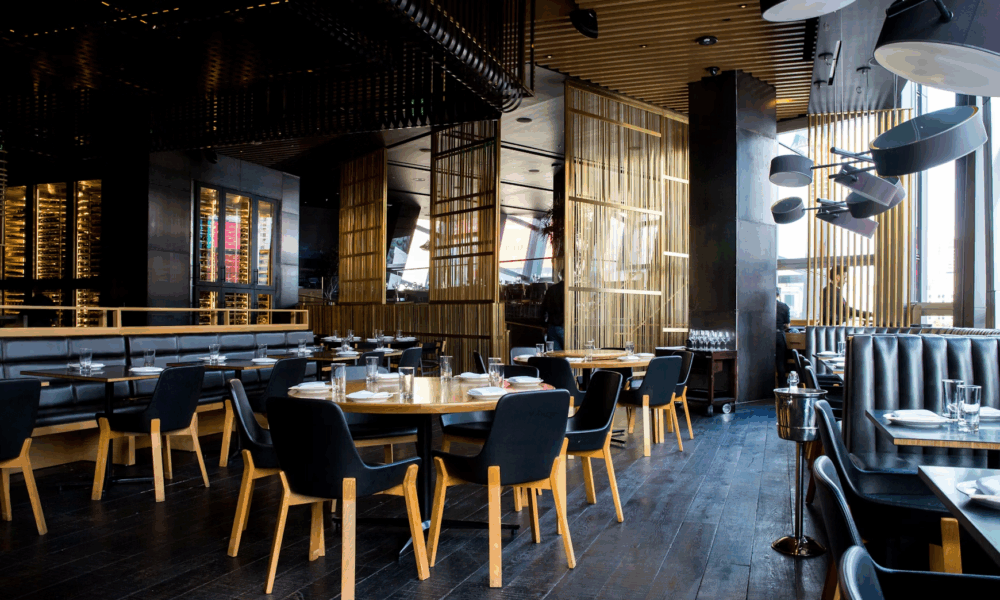
I worked at Callahan’s, a tiny, family-owned Italian place on the edge of a rusting industrial town in Ohio. It wasn’t the kind of place you saw on food blogs. It was the kind of place with red checkered tablecloths that were actually vinyl, plastic grapes hanging from the ceiling gathering dust, and a perpetual smell of garlic, floor wax, and damp coats.
And before you get any ideas about a glamorous coming-of-age story, I wasn’t even a waiter.
Management thought I looked “too green” for customer service. Too skinny, too quiet, too much like a kid who was afraid of his own shadow—which, to be fair, I was. So I was stuck in the back, the invisible cog in a greasy machine. I spent my shifts scraping gum off chairs, bussing tables until my back screamed, and scrubbing plates until my fingers pruned and bled around the cuticles from the industrial soap.
I didn’t get tips. Just minimum wage and the constant, nagging hope I wouldn’t get yelled at for “standing around” while I was catching my breath.
But I didn’t complain. Not once.
After my parents died in a car accident—a slick patch of ice on a Tuesday night that turned my life upside down—I inherited their old house and the mess they left behind. It turns out that grief doesn’t stop the mortgage company from sending letters. The debt was crushing, a physical weight that sat on my chest every time I tried to sleep. The house was a mausoleum of memories, filled with half-finished projects my dad would never complete and books my mom would never read.
I was barely staying afloat, one paycheck away from losing everything. So every dollar mattered. Every hour on the clock was a lifeline.
The Night That Changed Everything
Until that fateful night that cut straight to the bone.
It was November. The kind of November that bites. The wind howled behind the restaurant like it had teeth, rattling the heavy metal door of the loading dock. I was taking out the trash, the bags in my arms already soaked through with rain and kitchen slop. I pulled my hoodie tighter, muttering curses under my breath as the cold seeped into my bones.
The alley behind the building always smelled like sour grease and wet cardboard, a perfume of despair. But that night, something was different.
Something moved near the dumpster.
I stopped cold, my grip tightening on the slick black plastic.
There, half-buried under a pile of damp blankets and cardboard boxes, was a man. He looked barely conscious, knees pulled to his chest, shaking violently. His clothes were rags, thin layers that offered no protection against the freezing rain. His lips were tinged blue, eyes fluttering open like it physically hurt to do so.
“Sir?” I stepped closer, cautious but concerned. “Are you okay?”
He tried to speak, but only a croak came out.
“No… just cold… so cold…”
I stood there for a second, torn between the paralyzing fear of what would happen if someone saw me—if Mr. Callahan saw me—and the overwhelming, human instinct not to let this man freeze to death five feet from a kitchen full of heat and leftover soup.
Screw it.
“Come on,” I said, pulling him up carefully. He was lighter than I expected, frail under the layers of grime. He smelled of rain and sickness. “This way. Quietly.”
He could barely walk. I took him through the back door, moving fast, my heart thudding against my ribs like a trapped bird. I could already hear my boss’s voice in my head—“You don’t bring street rats in here, Derek! We run a respectable business!”
I guided him to the supply closet near the break room. It was cramped, packed with boxes of paper towels and extra napkins, smelling of bleach and dust. But it was warm. And it was hidden.
I grabbed a clean towel from the stack, wrapped it around his shivering shoulders, then ran to the kitchen. I moved like a ghost, dodging the line cooks who were busy shouting orders. I filled a bowl with leftover minestrone soup—thick, hot, and hearty—and grabbed a few rolls of bread from the warmer.
When I handed it to him, his hands trembled so badly he almost dropped the spoon.
“T-Thank you,” he whispered, the steam from the bowl hitting his face. And then, as he took a sip, he started crying—silent, shaking sobs between spoonfuls that broke my heart.
“My name’s Arthur,” he managed to say between bites. “I used to play piano. Can you believe that? My fingers used to fly.”
I looked at his gnarled, freezing hands. “I believe you, Arthur. You can stay here tonight,” I told him, my voice low. “Just until morning. The morning shift doesn’t come in until 9.”
He nodded, eyes shining with a gratitude that made me feel small.
But I wasn’t even two steps out of the closet when I heard it.
The Confrontation
“What the hell is going on back here?”
I turned, and there he was. Mr. Callahan.
He was a man built like a barrel, with wide shoulders and a face that was always red, like a volcano seconds from eruption. He stood at the end of the hallway, hands on his hips. His eyes zeroed in on the open supply closet door, then snapped back to me.
“Is that—” he stormed past me, yanked open the door.
Arthur cowered, pulling the towel tighter, the soup sloshing onto his lap.
“You brought a homeless man into my restaurant?!” Callahan roared. “Are you insane?!”
“Please,” I said, stepping between them, holding my hands up. “He was going to freeze. It’s thirty degrees out there. I was just trying to—”
“I don’t care!” he shouted, spit flying. “This is a business, not a shelter! Do you know the health code violations? Do you know the liability? If a customer saw this, we’d be ruined!”
The shouting echoed through the hallway. The staff stopped what they were doing. Even the clatter of dishes from the kitchen fell silent.
“Fire him,” Callahan barked, jabbing a thick finger at me. “Right now. Get him out.”
My heart dropped into my stomach.
“Wait—Mr. Callahan, come on,” said Mark, the floor manager. Mark was a good guy, quiet, always tried to be fair. He stepped forward from the kitchen doorway. “He didn’t mean any harm. He was just trying to help. It’s freezing out there. The kid has a good heart.”
“I don’t pay him for his heart! I pay him to clean plates!” Callahan barked again, not even looking at Mark. “And get that bum out of here before I call the cops!”
Mark looked at me. His face was pale. His lips parted like he wanted to say something else, to fight for me… but he had a mortgage too. He had kids in college.
“I’m sorry, Derek,” he whispered, his voice heavy with defeat. “You’re done.”
And just like that, I lost my job. It was the only thing holding my world together, the only thing keeping the wolves from the door, and it snapped.
The Long Walk Home
I walked home in the rain that night.
I didn’t even bother with the bus—what was the point of spending the $2.50? I needed the walk. I needed to feel the cold sting on my face to remind myself I was still here. Still breathing, even if barely.
When I got home, my soaked shoes left muddy prints on the cracked tile floor of the entryway. The silence in that old house was louder than any shouting I’d faced earlier. It was a heavy, suffocating silence. I peeled off my wet hoodie and slumped into the kitchen, where a stack of unopened mail waited on the table like a threat.
One envelope sat right on top, marked URGENT in red ink.
I already knew what it was before I opened it. Another payment due. A final notice of foreclosure intent. One I couldn’t make. Not now, not ever, if something didn’t change.
I sat down at the kitchen table, head in my hands, and just… let it crash over me. All of it. The debt, the job, my parents’ ghost still clinging to every room in that house. I felt like I was drowning on dry land. I looked around the kitchen where my mother used to bake blueberry muffins, where my father used to drink his coffee and read the paper.
“I failed you,” I whispered to the empty room. “I lost the house.”
I didn’t sleep much that night. I stared at the ceiling, counting the cracks in the plaster, wondering how long it takes to freeze to death if the heating gets cut off.
The Envelope on the Porch
But when I finally pulled myself off the couch the next morning, eyes gritty and swollen, and opened the front door to check the mailbox… I stopped.
There was something on my doormat.
A thick, sealed manila envelope. No name. No return address. Just sitting there, dry, as if the storm hadn’t touched it.
I looked around. The street was empty. The morning fog was still clinging to the pavement. Frowning, I picked it up. It was heavy.
I tore it open right there on the porch.
Inside was a plane ticket.
One way. To New York City.
There was also a roll of crisp bills—hundreds, maybe thousands—wrapped in a rubber band. And a folded piece of paper.
My hands shook as I opened the note. The handwriting was neat, precise.
“Derek,
What you did yesterday showed the kind of man you are. You didn’t lose your job — you outgrew it. Integrity is expensive, and you paid the price without blinking. I have a friend who manages one of the most prestigious restaurants in Manhattan. I told him about you. He agreed to hire you as a trainee. This cash is for a start. Go. You have a future much bigger than this town.
Mark.”
Mark?
Mark—as in the same manager who fired me? The guy who stood there and let Callahan kick me out? He must have come by in the middle of the night. He must have dipped into his own savings for this.
I sat on the porch step, stunned. The wind picked up the edge of the envelope, fluttering the plane ticket, but I didn’t move. My eyes burned, and I let them.
For the first time in years, I cried.
Not because I was broken… But because someone, finally, believed I was worth saving. Someone saw me.
And just like that, the door I thought had slammed shut the night before had led to something else entirely. A fire escape.
A beginning.

The City of Lights and Shadows
I flew to New York the next day. The plane touched down just after dawn, the city skyline rising out of the mist like a jagged crown.
I’d never been on a plane before. I’d never even left my home state. But there I was—18 years old, one backpack filled with everything I owned, a wad of cash I was too scared to count in public, and a job I didn’t dare believe was real.
I took the subway into Manhattan. The noise was a physical assault—the screech of metal wheels, the hum of voices in a dozen languages, the buskers playing drums on plastic buckets. It smelled of ozone and hot pretzels and urine. It was terrifying. It was electric.
The address Mark gave me led to a building in Tribeca. The Gilded Lily.
It was… massive.
I stood outside the heavy oak doors for ten minutes, smoothing down my shirt, trying to wipe the travel dust off my shoes. I looked at my reflection in the window. I looked like a kid. A lost kid.
I pushed the doors open.
Inside, crystal chandeliers hung from the ceiling like frozen fireworks. Floors so polished I saw my reflection in them. Waiters in tailored uniforms glided across the room like ballet dancers, balancing silver trays with an elegance that seemed impossible. It felt more like a palace than a place to eat.
And me?
I stood there in borrowed dress shoes that pinched my toes, heart thudding like a drum against my ribs.
“Can I help you?” a hostess asked, looking me up and down with a skepticism that made me want to shrink.
“I’m here to see Julian,” I said, my voice cracking. “Mark sent me.”
Her expression changed instantly. “Oh. Wait here.”
Moments later, a sharp-dressed man with silver hair and the posture of a general walked toward me. He moved with a fluidity that commanded attention without demanding it.
“Derek, right?”
“Yes, sir.”
He looked me up and down, not with judgment, but with assessment. He checked my fingernails. He checked my shoes. He checked my eyes.
“I’m Julian. Mark told me you were green but worth the gamble. He said you have integrity. In this city, talent is cheap, but integrity is rare.”
“I… I’ll work hard,” I managed to say. “I won’t let you down.”
He raised an eyebrow. “Good. Because this place doesn’t slow down. We serve senators, celebrities, and people who can ruin your career with a single tweet. You give me one reason to regret this, and you’re out. Understand?”
“Yes, sir.”
“Start in the back. You have to earn the floor.”
The First Winter
The first six months were a blur of exhaustion and homesickness.
New York in winter is not like the movies. It’s grey slush at the crosswalks and wind that tunnels through the avenues like it’s hunting you. My apartment in Queens was a fourth-floor walk-up with a radiator that hissed and banged but produced no heat. I shared it with three other guys—a line cook, a taxi driver, and a jazz musician who practiced at 3 AM.
Christmas Eve was the hardest.
The restaurant was closed. My roommates had all gone home to their families or were working parties. I was alone in the apartment, wrapped in a blanket, eating a bodega sandwich.
I scrolled through social media on my cracked phone. I saw pictures of people from my high school getting married, having babies, celebrating in warm living rooms. I felt an ache in my chest that was so sharp I almost couldn’t breathe.
I thought about the house in Ohio. I had used Mark’s money to pay the back mortgage, but I had to rent it out to keep it. I was a landlord to my own childhood home, living like a pauper in a city of kings.
I almost packed my bag right then. I almost went to the bus station.
But then I looked at the little notepad I kept by my bed. It was filled with notes on wine pairings, French service terms, and napkin folds. I turned to the first page, where I had taped Mark’s note.
You have a future much bigger than you think.
I closed my eyes. I ate my sandwich. And I stayed.
The Broken Glass
The real test, however, wasn’t the loneliness. It was the fear of failure.
Two months later, on a busy Friday night at The Gilded Lily, I made a mistake. A big one.
I was running a tray of expensive red wine—a vintage Bordeaux that cost $400 a bottle. I was moving through the crowded dining room when a customer backed his chair out without looking.
I swerved. My foot caught the edge of a rug.
Smash.
The sound silenced the room. Red wine exploded across the pristine white tablecloth of Table 6. Glass shattered everywhere. The customer, a wealthy investment banker, jumped up, shouting about his suit.
I froze.
Flashbacks of Mr. Callahan roared through my head. You idiot! Get out! You’re fired! I stood there, trembling, waiting for the screaming to start. I waited for Julian to storm over and throw me out on the street.
Julian did walk over. He moved calmly through the chaos. He signaled two busboys to clean the mess. He spoke quietly to the customer, offering to pay for the cleaning and comping the meal.
Then he turned to me.
I braced myself. “I’m sorry,” I whispered. “I’ll pack my things.”
Julian looked at me, confused. “Why?”
“Because… I ruined it. I cost you money.”
Julian sighed. He put a hand on my shoulder—not to shove me, but to steady me.
“Derek, look at me.”
I looked up. His eyes weren’t angry. They were serious, but calm.
“We are not saving lives here,” Julian said. “We are serving dinner. It is just wine. It is just glass. Did you drop it on purpose?”
“No, sir.”
“Did you try to save it?”
“Yes, sir.”
“Then go to the back, clean yourself up, get a fresh apron, and get back on the floor. Mistakes happen. Panic is a choice. Do not choose panic.”
I stared at him. This was leadership? This wasn’t fear?
“Go,” he said gently.
That night, I didn’t just learn how to carry a tray. I learned how to be a leader. I learned that fear creates mistakes, but confidence fixes them.
The Search for Arthur
Years passed. I moved up the ranks. I became the General Manager. I had money in the bank. I had a nice apartment.
But there was a loose thread.
One night, sitting in my office at The Gilded Lily, I hired a private investigator back in Ohio. It cost me a week’s salary, but I needed to know.
I wanted to find Arthur.
I wanted to tell him that the bowl of soup I gave him hadn’t been for nothing. That his suffering that night had launched my life.
Three weeks later, the PI called me.
“I found him,” the voice said. “Arthur Penhaligon.”
“Is he… is he okay? Can I send him money?”
There was a pause.
“He passed away, Derek. Two years ago. Pneumonia.”
My heart sank.
“But,” the PI continued, “I found out something else. He wasn’t just a homeless guy. He was a music teacher for thirty years. He lost his mind a bit after his wife died, stopped paying bills, ended up on the street. But the shelter records say that a few years ago, someone gave him a heavy winter coat and a wad of cash. He used it to get into a halfway house for a few months. He spent his last year teaching kids at the center how to play piano.”
I gripped the phone. The cash. Mark.
Mark had gone back. Mark had finished what I started.
I hung up the phone and cried. Not out of sadness, but out of a fierce, burning resolve. Arthur didn’t die in that alley. He died teaching music. Because we tried.
The Shark and the Dream
When I finally decided to open my own place, the investors circled like sharks. I had the reputation now. I was the “Boy Wonder” of the New York restaurant scene.
One meeting stands out.
I was sitting in a glass-walled conference room with a venture capitalist named Sterling. He was offering me two million dollars. It was enough to build my dream restaurant three times over.
“I love the concept,” Sterling said, leaning back in his leather chair. “upscale comfort food. Very trendy. But I have some notes on the business plan.”
“Okay,” I said.
“This ‘Community Hour’ you have listed. Where you open the back door from 4 to 5 PM for the homeless? No. Absolutely not.”
“It’s non-negotiable,” I said.
Sterling laughed. “Derek, be serious. You can’t have bums lining up next to a place where people pay fifty dollars for a steak. It ruins the brand. It kills the property value.”
“The brand,” I said, standing up, “is hospitality. True hospitality. Not just for the people who can afford it.”
“You’re being naive. You take my money, you play by my rules. No free soup. No back door charity.”
I thought about the debt I used to have. I thought about the fear of poverty. Two million dollars could fix everything forever.
But then I thought about Arthur shivering in the closet. I thought about Mark handing me that envelope.
“Then I don’t want your money,” I said.
Sterling looked shocked. “You’re walking away from two million dollars?”
“I’m walking away from a bad partner,” I said. “Keep your money. I’ll find another way.”
I walked out. I didn’t have the funding yet, but I had my soul.
The Reunion
I hadn’t heard from Mark in a long time. Life moved fast in the city, a blur of seasons and shifts. I sent him Christmas cards, updates, checks to pay him back (which he never cashed), but he was a man of few words. I figured he had his own path to walk.
But on a rainy Tuesday afternoon, like something out of a movie, I saw a familiar silhouette at the front desk.
It was raining hard, a relentless downpour that turned New York gray.
A man stood there, shaking off a wet umbrella. Gray blazer. Shoulders a little more slumped than I remembered. Kind eyes that looked tired, etched with the lines of hard years.
He looked at the opulent dining room, clearly hesitating, wondering if he was in the wrong place.
“Reservation for Mark,” he said to the hostess, his voice quiet.
I froze. I was standing near the bar, reviewing the night’s wine list. I looked up.
It was him.
The years stripped away. I wasn’t the General Manager in a tailored Italian suit. I was the kid in the hoodie, soaking wet, holding a plane ticket.
I smiled. A real, genuine smile that felt like sunshine breaking through the clouds. I handed the wine list to the sommelier and walked over. I straightened my jacket, took a deep breath, and stepped into his line of sight.
“Right this way, sir.”
Mark turned, confused at first. He saw a man in a tailored suit, confident, commanding the room. He saw the expensive watch, the polished shoes.
Then his eyes landed on my name tag.
Derek M. General Manager
He didn’t say anything. He just stared at me for a second, then blinked like he couldn’t trust his own eyes. His mouth opened slightly, then closed.
“…You did it,” he whispered. The pride in his voice cracked a little.
I shook his hand—firmly, this time. Then I pulled him into a hug right there in the lobby, ignoring the decorum of the high-end establishment. “No,” I said, my voice thick with emotion. “We did. You believed in me when no one else would. You saved me, Mark.”
He nodded, swallowing hard, patting my back. The same man who once had to fire me to save his own skin… was now my honored guest.
The Dinner of a Lifetime
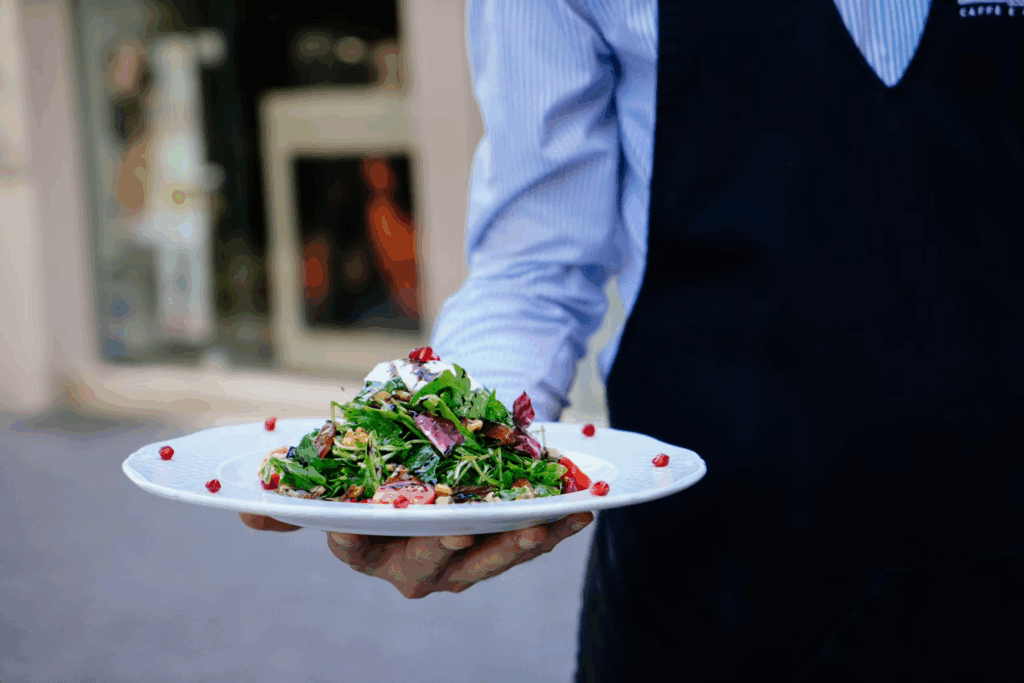
I didn’t let him pay for a thing. I escorted him to Table 1, the best seat in the house by the window overlooking the rain-slicked cobblestones.
“Derek, this is too much,” Mark said, looking at the white linen. “I just wanted to see how you were doing. I didn’t expect… this.”
“It’s not enough,” I said.
I sat with him. I let my assistant run the floor.
We talked for hours.
I learned that Callahan’s had closed down two years ago. Tax evasion. Callahan had lost everything. Mark had been working at a diner, scraping by, but he was happy. He had grandkids now.
I told him about Arthur. I told him about the PI report.
Mark went quiet. He swirled his wine.
“I wondered,” Mark said softly. “I wondered if he made it.”
“He did,” I said. “Because of you.”
I sent out a custom tasting menu: truffle risotto (the real deal), wagyu beef that melted on the tongue, a chocolate soufflé that required perfect timing. I paired every course with wines I selected myself.
Mark ate with a look of wonder. “I remember you eating stale bread in the breakroom,” he laughed.
“I remember you sneaking me sandwiches,” I countered.
He sat there, looking around at the restaurant—my restaurant—with the quiet pride of a teacher watching his student take flight. He watched me direct the staff with a nod, handle a complaint with a whisper, welcome guests with a smile.
The Next Dream
As he was leaving, the rain had stopped. The city lights reflected on the wet pavement, turning the street into a river of gold.
Mark put on his coat. He looked older than when he arrived, but lighter.
“You were never just a busboy, Derek,” he said, smiling. “You were just waiting for the right place to shine. I knew it the moment I saw you help that man.”
I laughed softly. “And you were the one who opened the door. You gave me the key.”
Mark chuckled, buttoning his coat. “You ever think about owning your own place someday? You run this place like it’s yours, but… it’s not.”
I raised an eyebrow, grinning. I reached into my jacket pocket and pulled out a folded piece of paper. It wasn’t just a blueprint; it was a promise.
“Funny you ask,” I said. “Got a meeting next week with a potential investor. A good one this time. One who understands the mission.”
Mark looked at the blueprint. It was a smaller space. Intimate. Warm. And in the corner of the layout, there was a designated space.
“What’s this?” Mark pointed.
“That,” I said, “is an upright piano. For live music.”
Mark looked at me, understanding dawning in his eyes.
“And see the back door?” I pointed. “It stays unlocked from 4 to 5. Soup kitchen style.”
“It looks… welcoming,” Mark said, his voice thick.
“It will be,” I said. “Think New York’s ready for a place called The Open Door?”
Mark’s face lit up. His eyes crinkled at the corners. And with a laugh that warmed the damp air, he said, “Yes, it is. And I’ll be the first customer.”
I watched him walk down the street until he disappeared into the city night. I stood there for a long time, breathing in the air of the city that had adopted me.
I had lost my job for doing the right thing. But I had gained a life.
And as I walked back inside The Gilded Lily, ready to close up for the night, I knew one thing for sure: When I opened my own place, the back door would always be unlocked for anyone who was cold.
Because you never know when an angel might be sleeping by the dumpster.
Let us know what you think about this story on the Facebook video! If this story touched your heart, please share it with friends and family to spread the message that kindness always comes back around.